The Journey App
UI & UX Design, Logo
2026
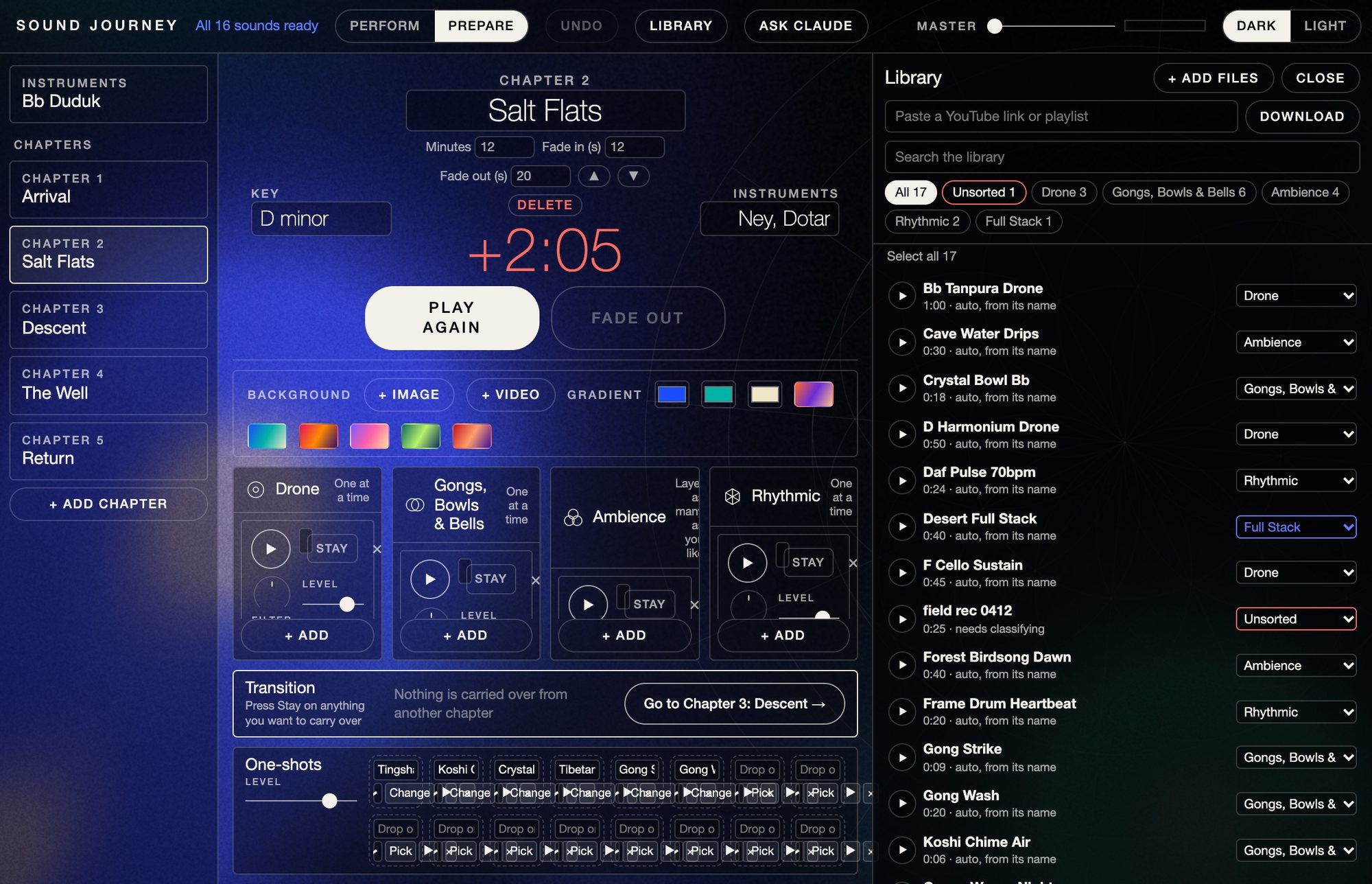
Thirty-four states were walked through on three screen sizes, with a test copy filled with sample sounds, and reviewed as a facilitator would use it: 3 critical, 9 major and 6 minor findings. On a smaller screen the fade control was pushed off the edge, playing and fading chapters looked the same, and the largest button showed a state but could not be pressed.
Before any layout, the facilitator's path through a session was mapped: build, rehearse, arrive, facilitate, close. Two rules came out of it. One touch, or one button on a controller, should do the job of a fade. And only the facilitator sees the screen, so nothing on it may ask for attention.






The app is being built as a web app first: installable from a link on iPad and Mac and working offline, so it can be handed to other facilitators without an app store. Stock sounds and photographs ship inside it and can be replaced from a file or a web address. It has not been released yet.
The Journey
Services
UI Design, UX Design, Logo
Market
Sound Journeys, Wellbeing, 2026
An app for facilitating sound journeys: guided listening sessions of drones, nature sound, rhythm and struck instruments, run chapter by chapter on an iPad or a laptop. The facilitator is the only person who sees the screen, often in a dim room with their hands on instruments. The work ran from an audit of the first version through research, three structure passes, type, colour and layout, to the final screens and a logo. AI use: the audit, research synthesis, wireframes, mockups and prototype were produced with Claude under my design direction.
Starting point
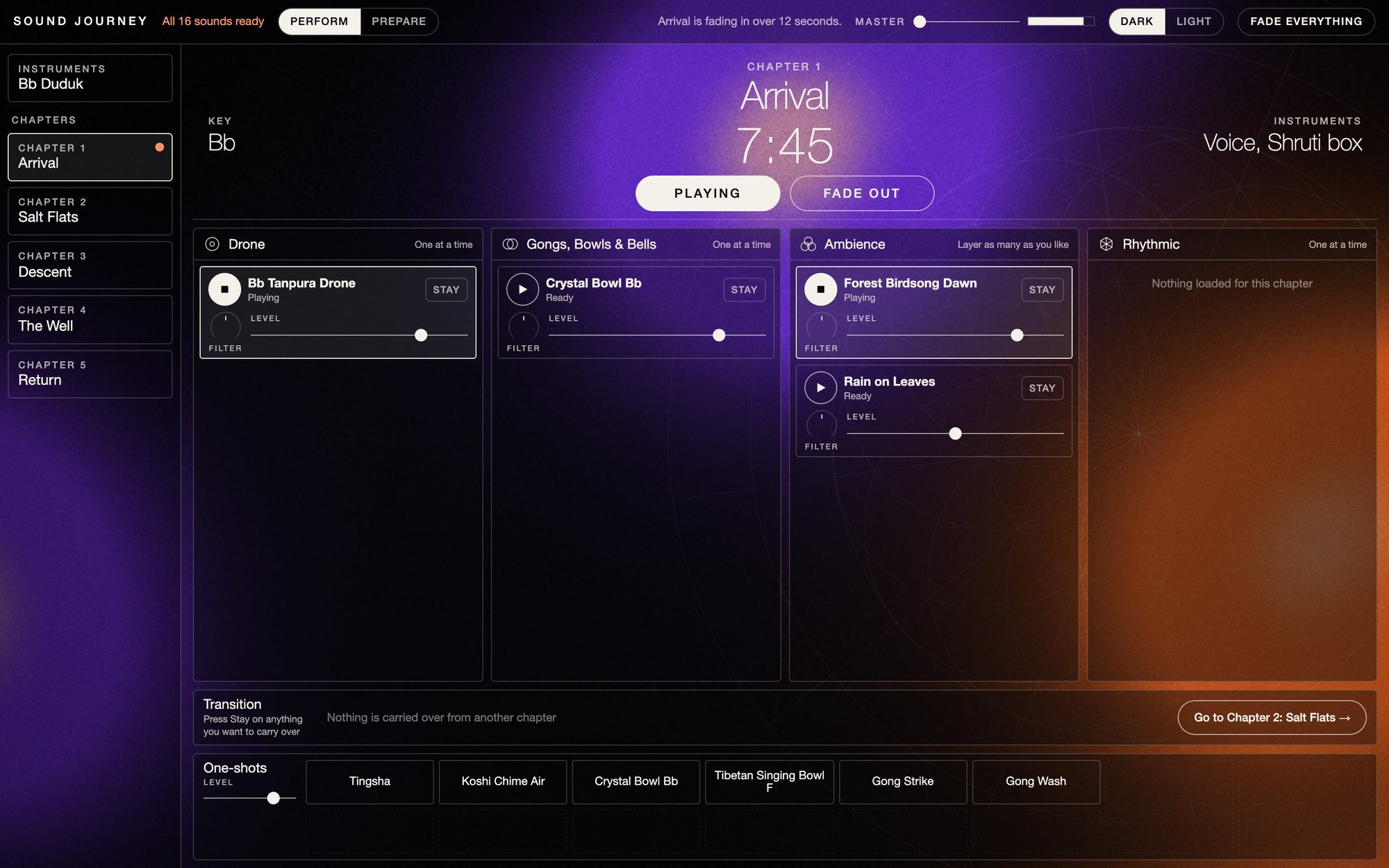
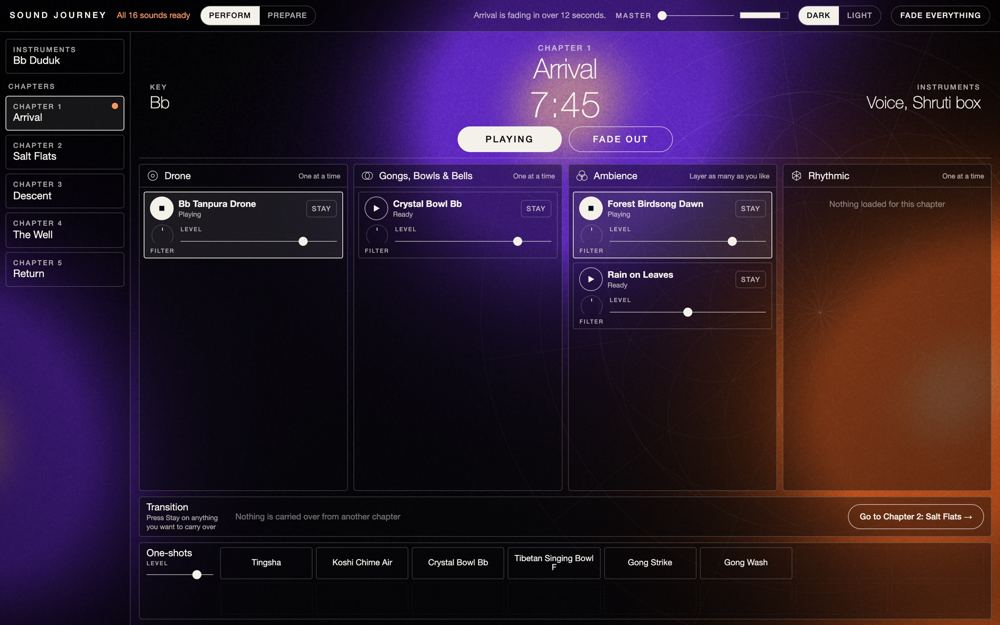
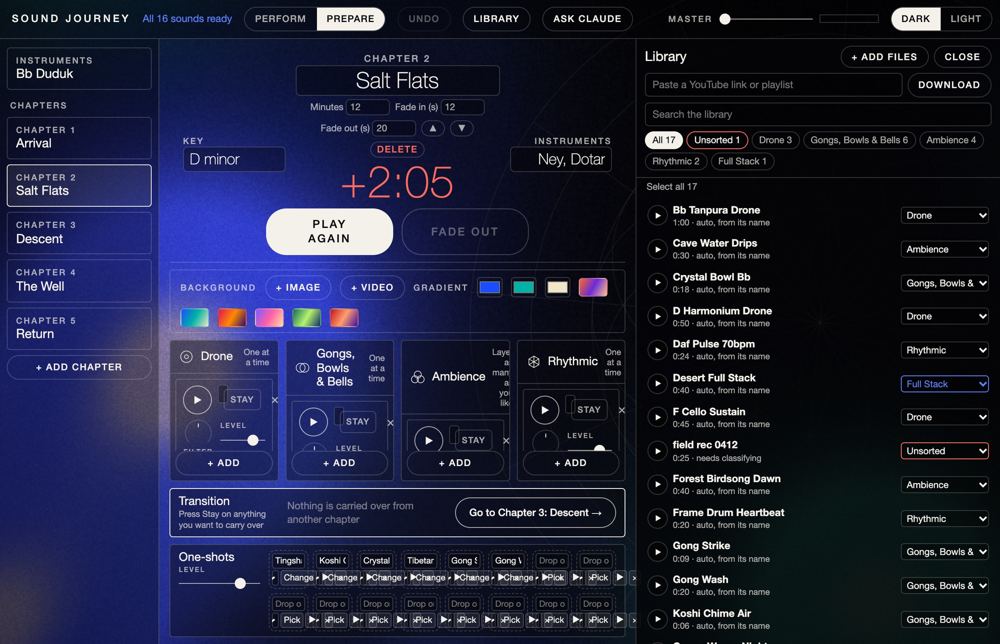
The first version: a live gradient background, four columns of tracks and sixteen one-shot pads. Every control had the same weight.
Audit
Thirty-four states were walked through on three screen sizes, with a test copy filled with sample sounds, and reviewed as a facilitator would use it: 3 critical, 9 major and 6 minor findings. On a smaller screen the fade control was pushed off the edge, playing and fading chapters looked the same, and the largest button showed a state but could not be pressed.
Research
Before any layout, the facilitator's path through a session was mapped: build, rehearse, arrive, facilitate, close. Two rules came out of it. One touch, or one button on a controller, should do the job of a fade. And only the facilitator sees the screen, so nothing on it may ask for attention.
Structure
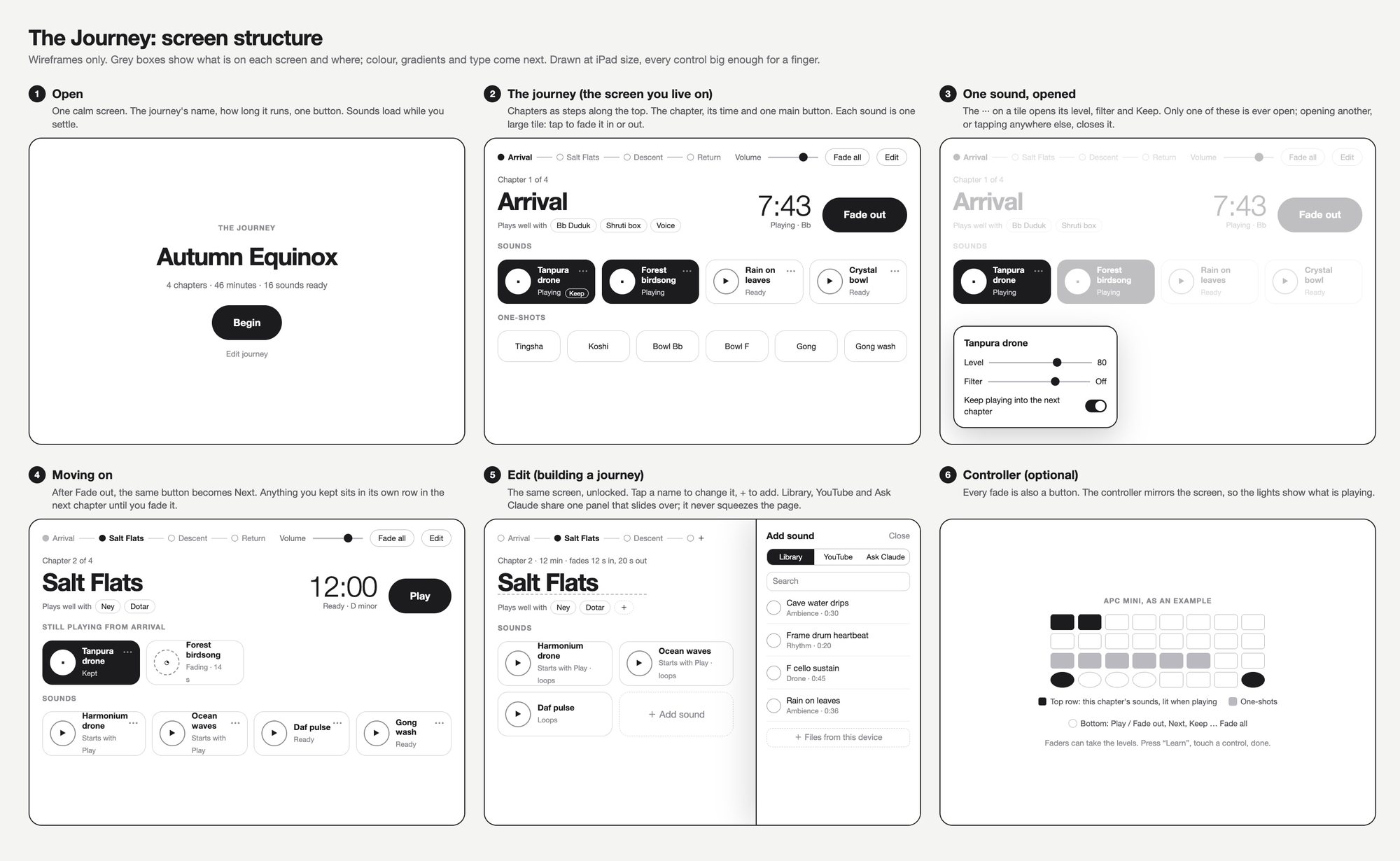
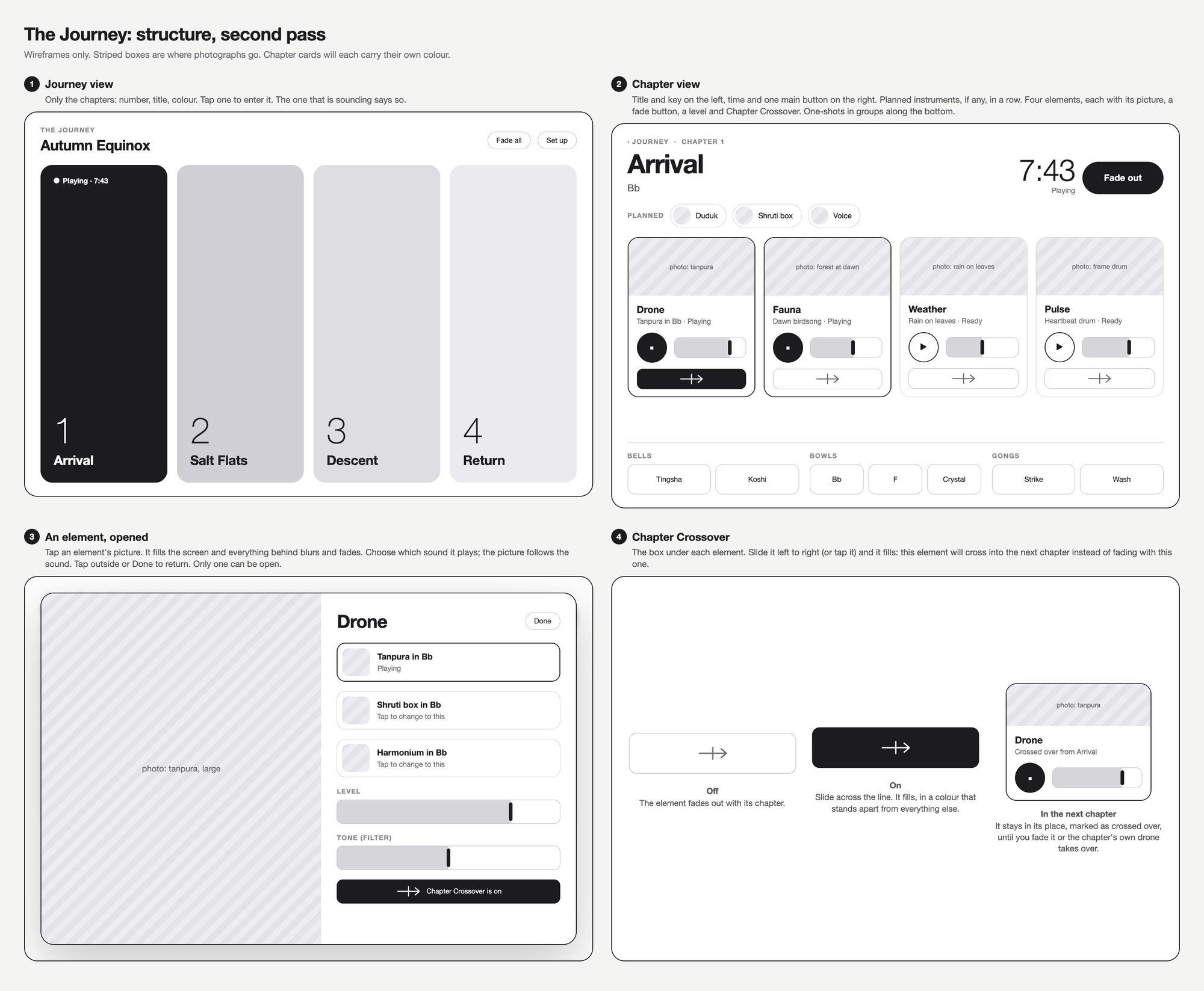
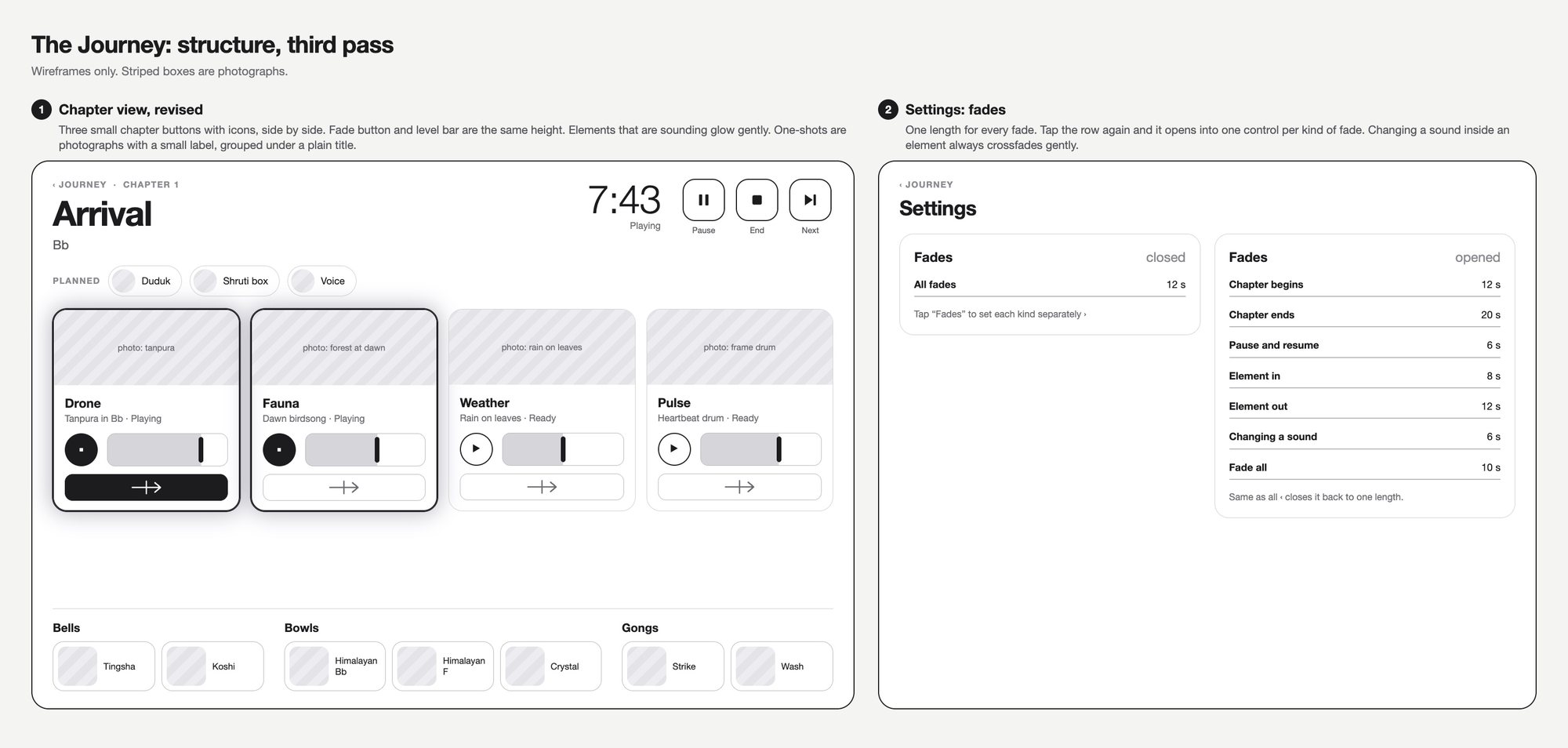
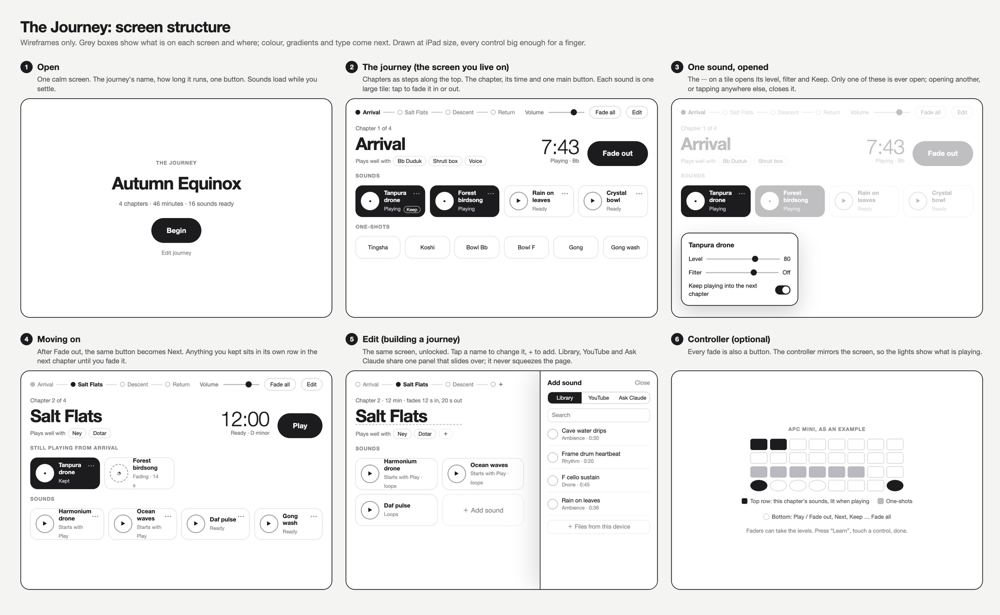
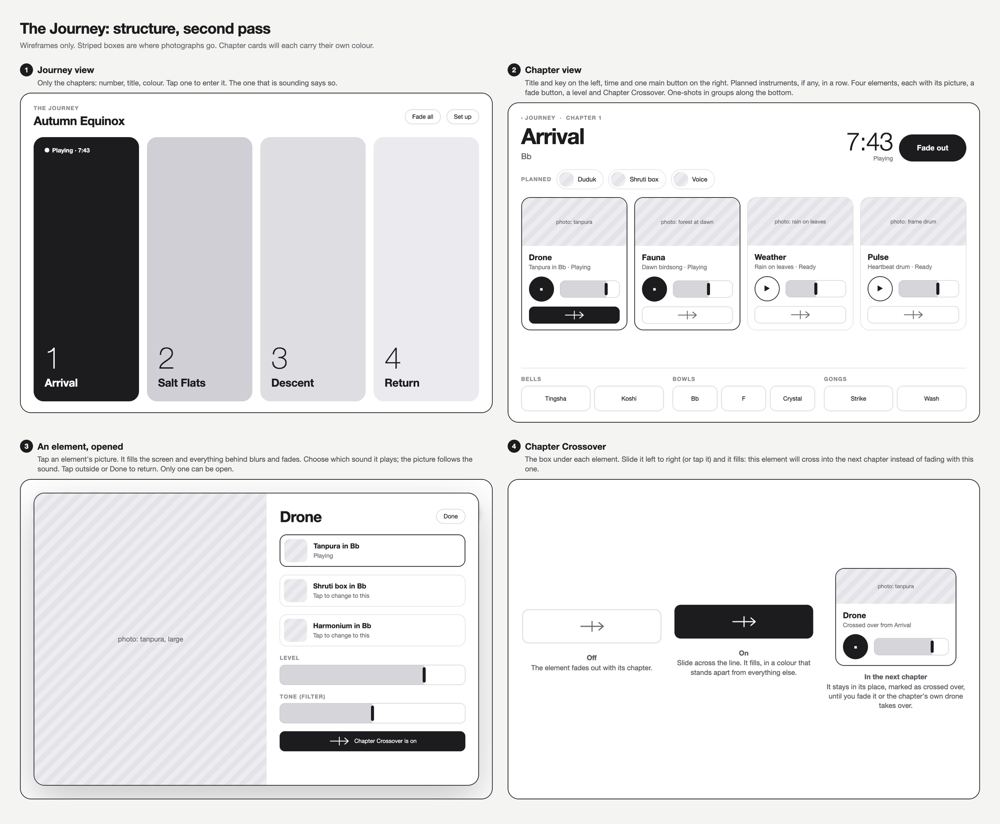
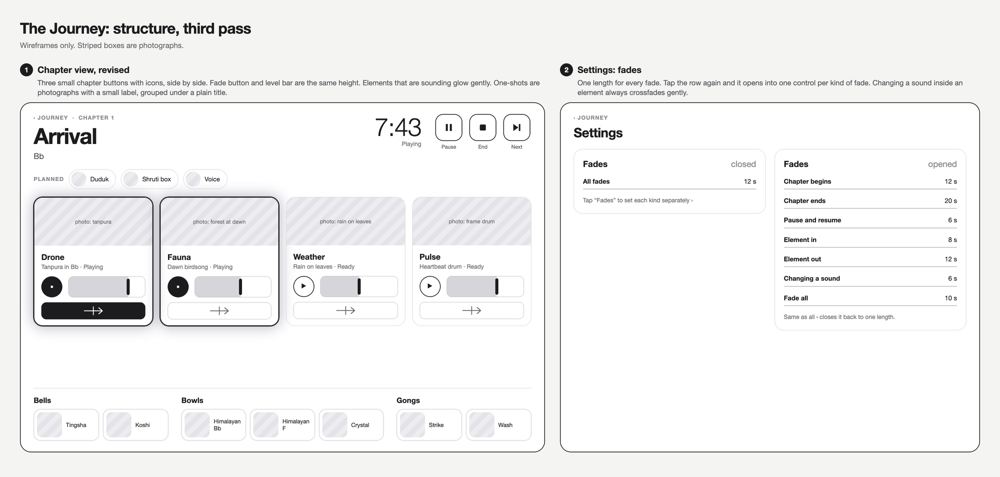
Three passes in grey boxes, with no colour or type decisions: six screens, then two levels and four elements, then transport, fades and resonants.
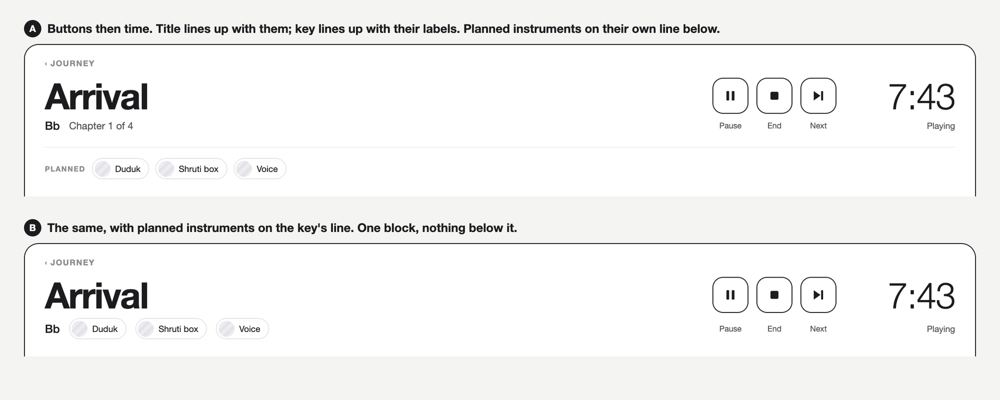
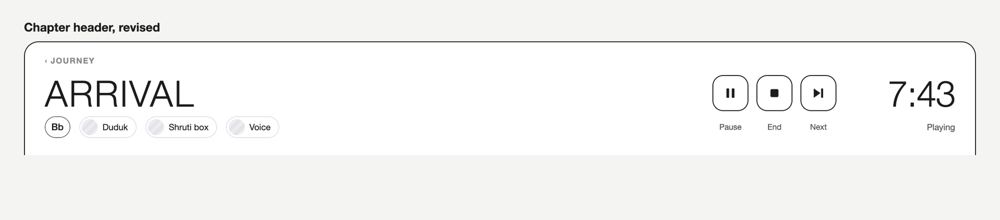
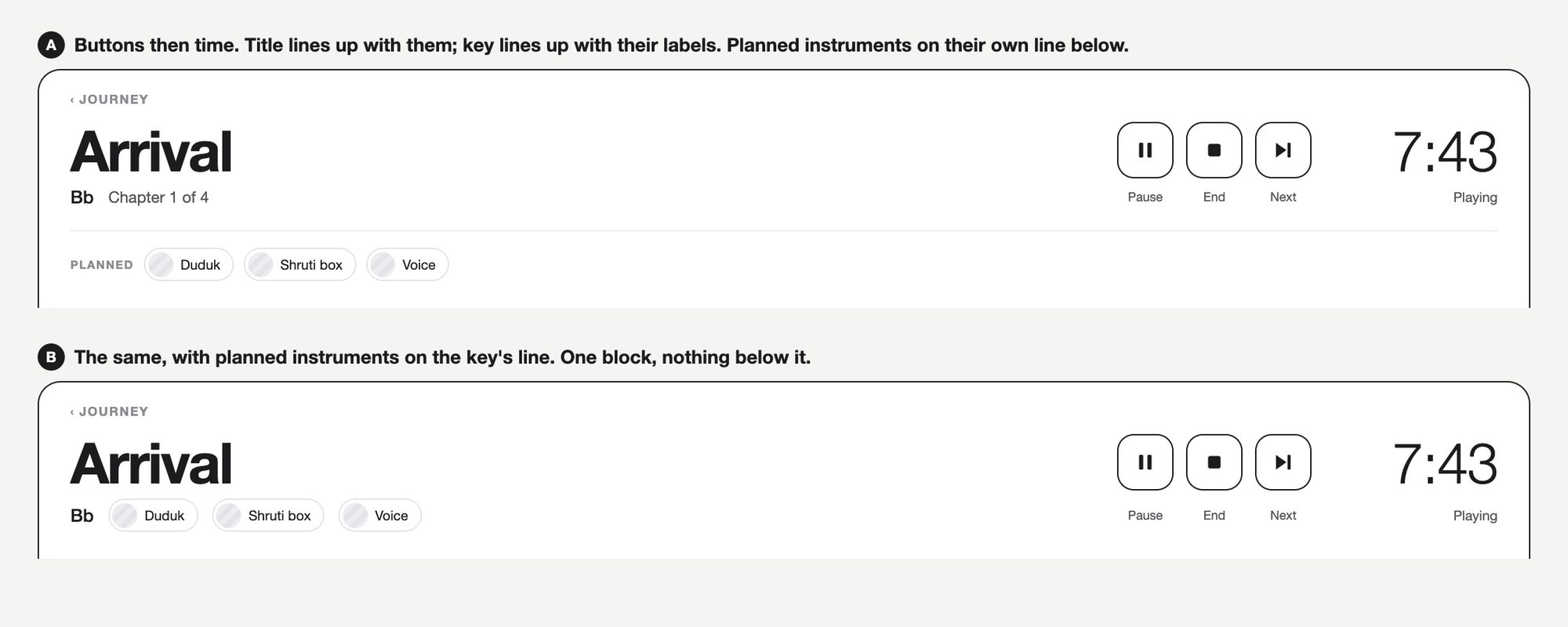
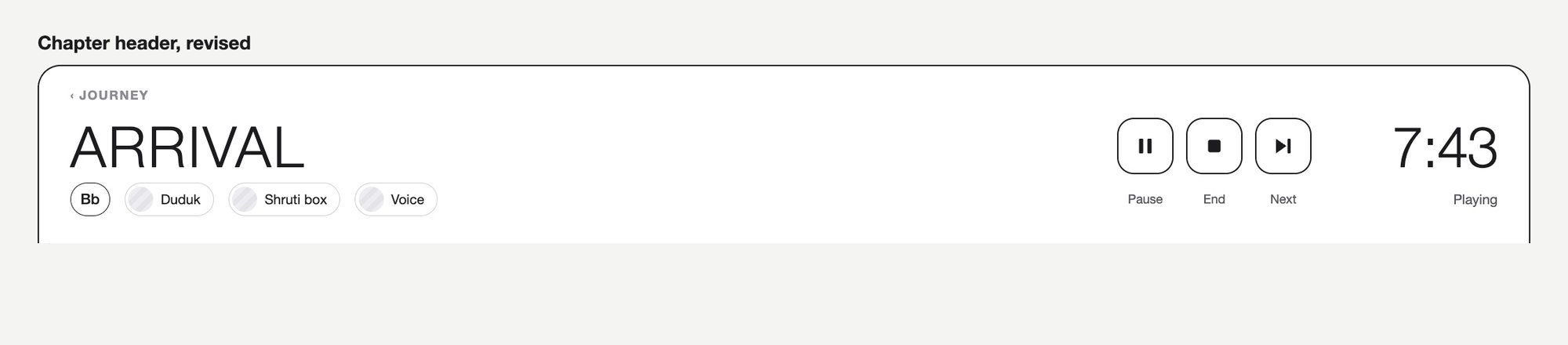
Chapter header
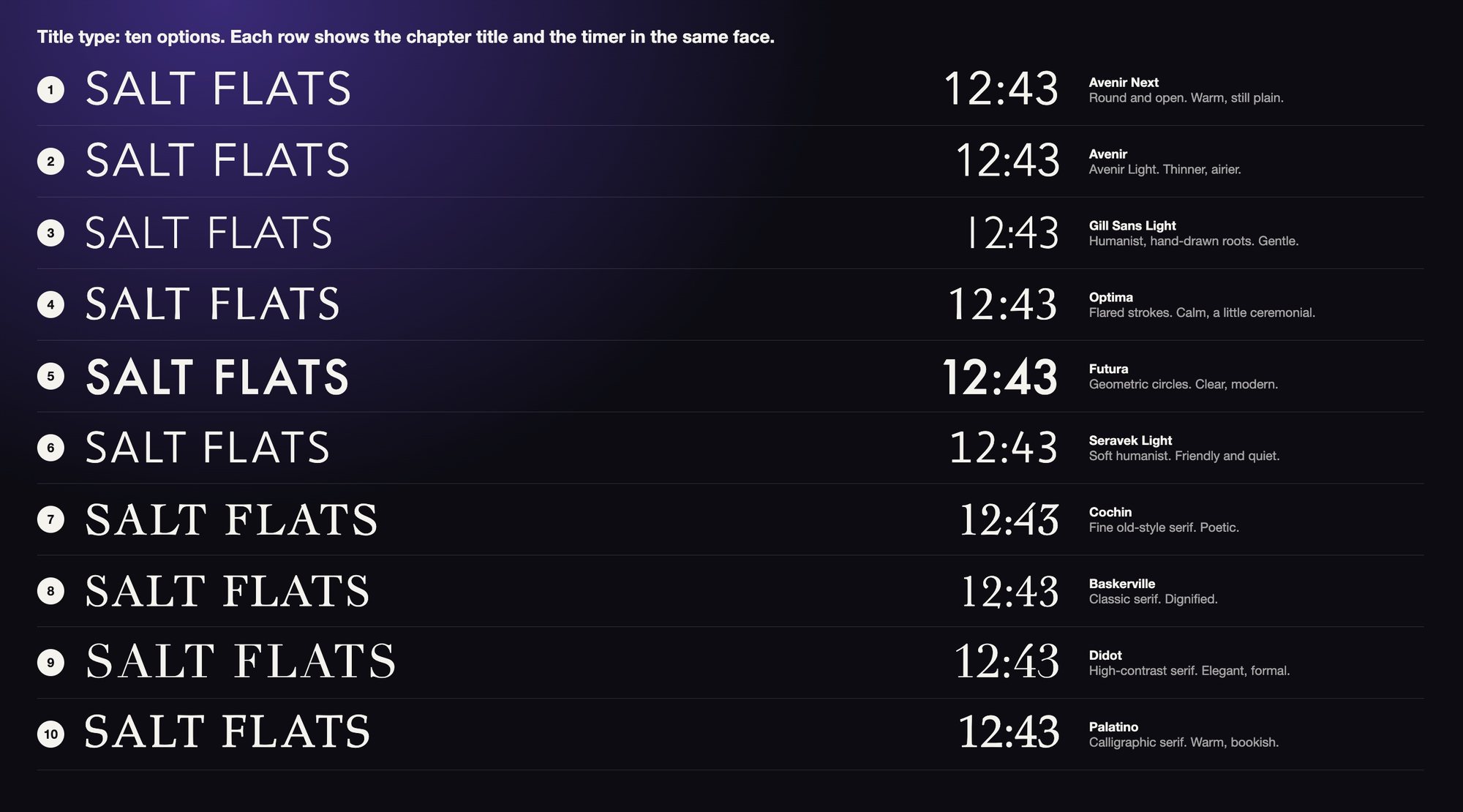
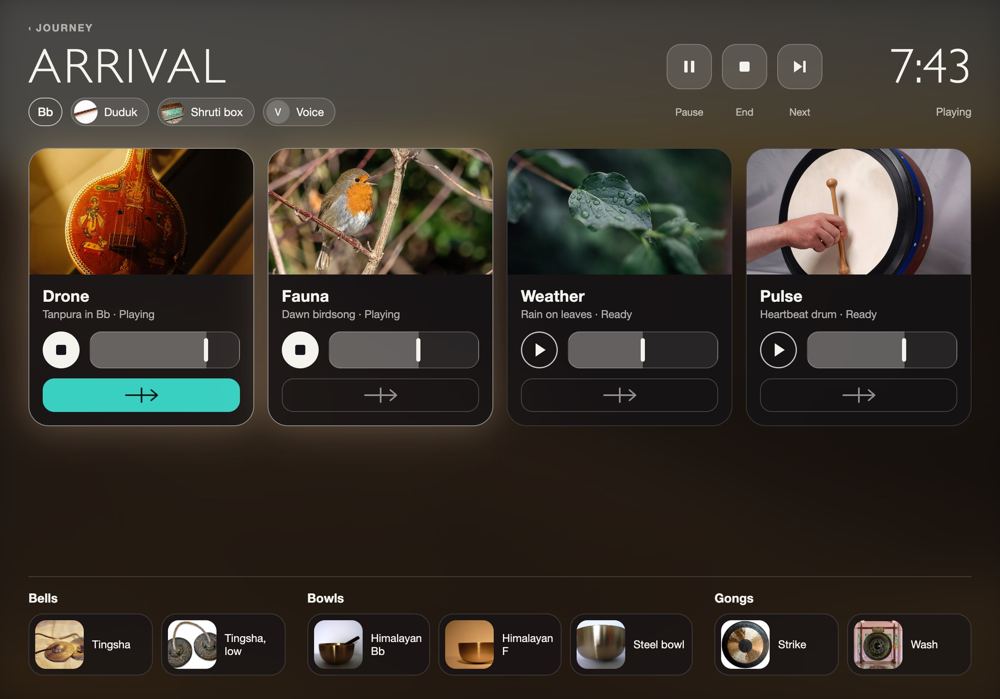
Title and timer share one face, in capitals. The key sits in a circle, matching the instrument chips.
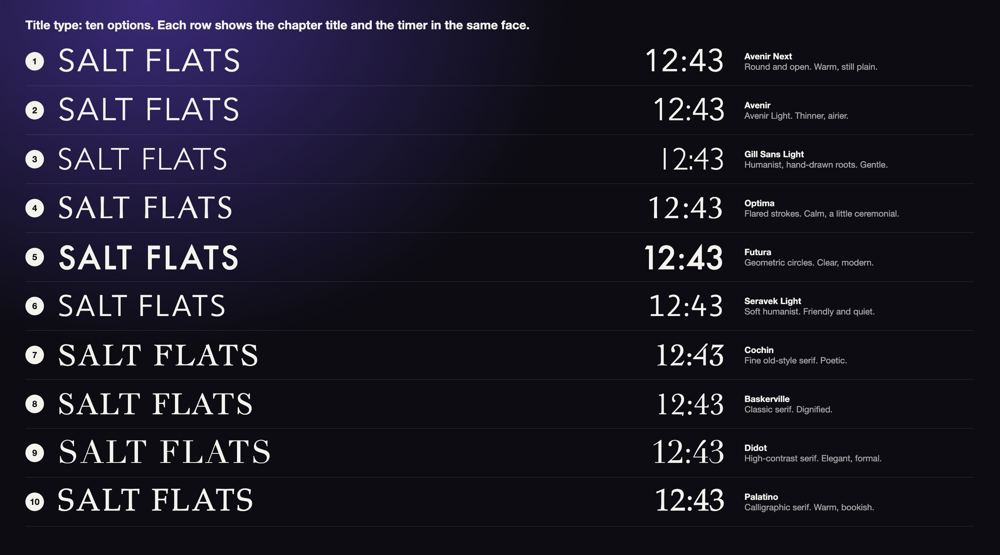
Typography
Ten faces already on every iPad and Mac, tested on a chapter title and timer. Gill Sans Light was chosen; Helvetica Neue stays for small interface text.
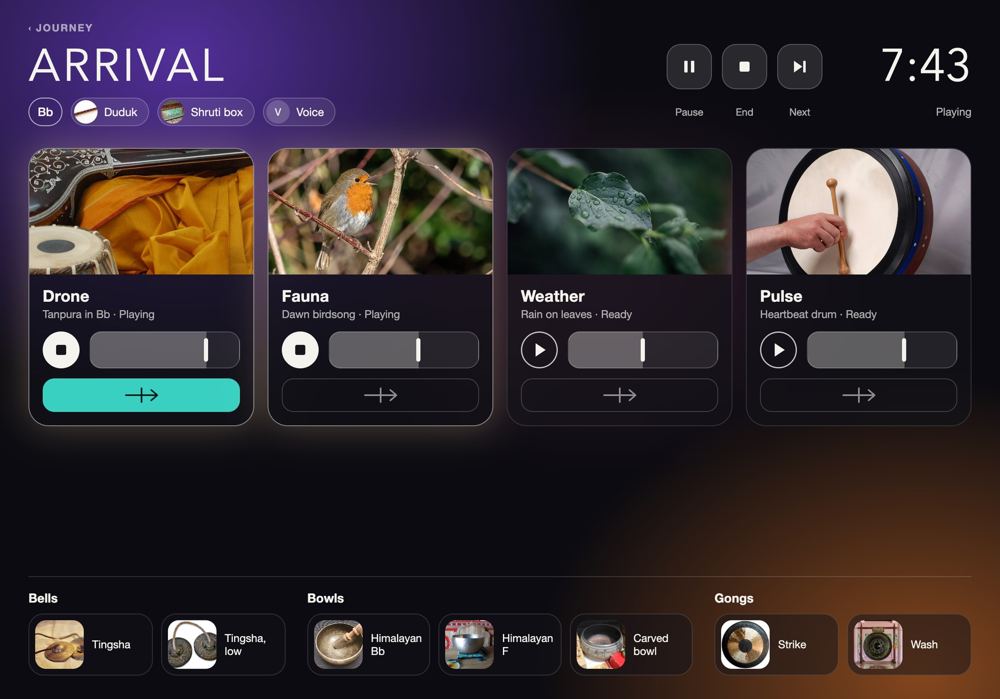
From colour to place
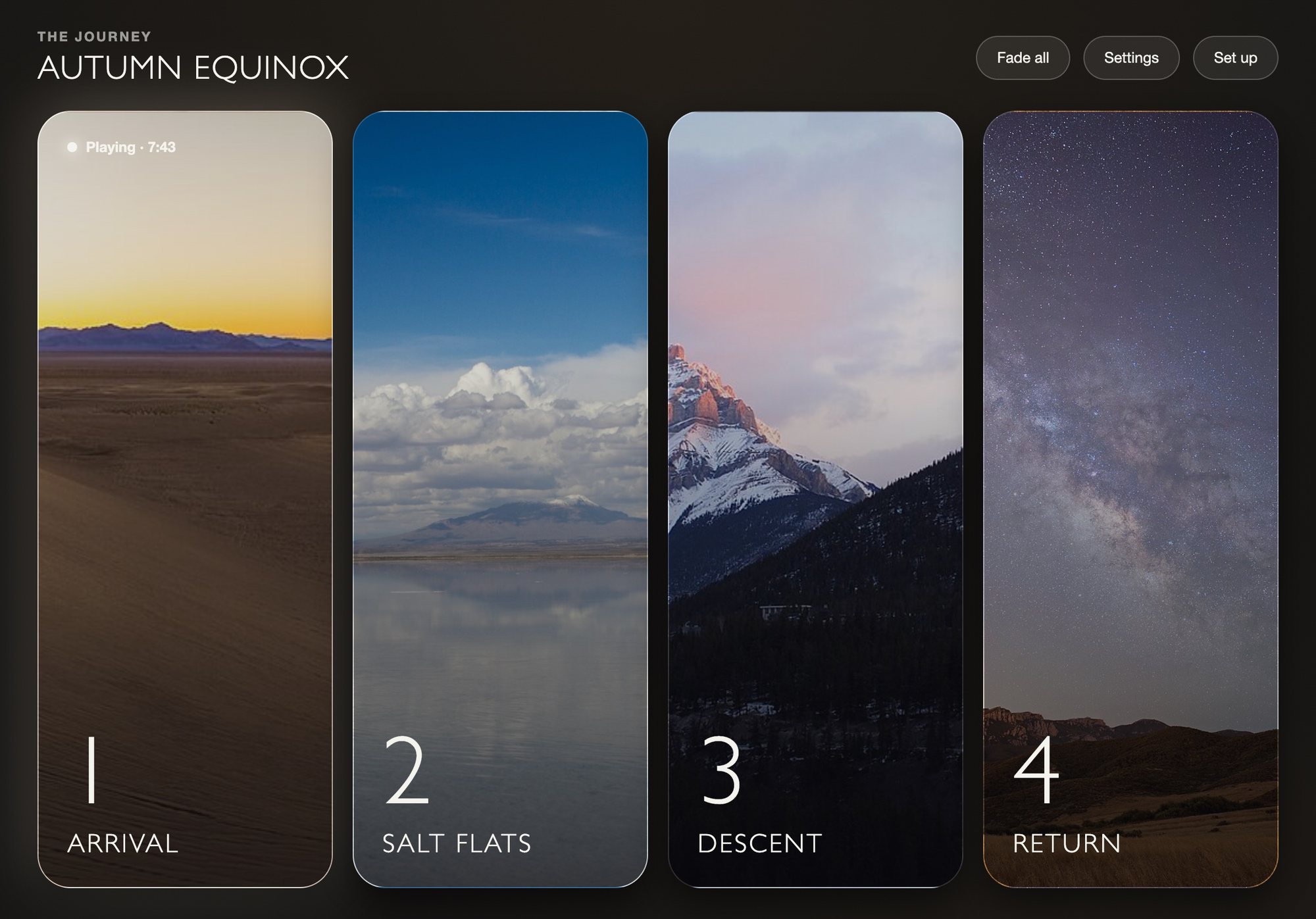
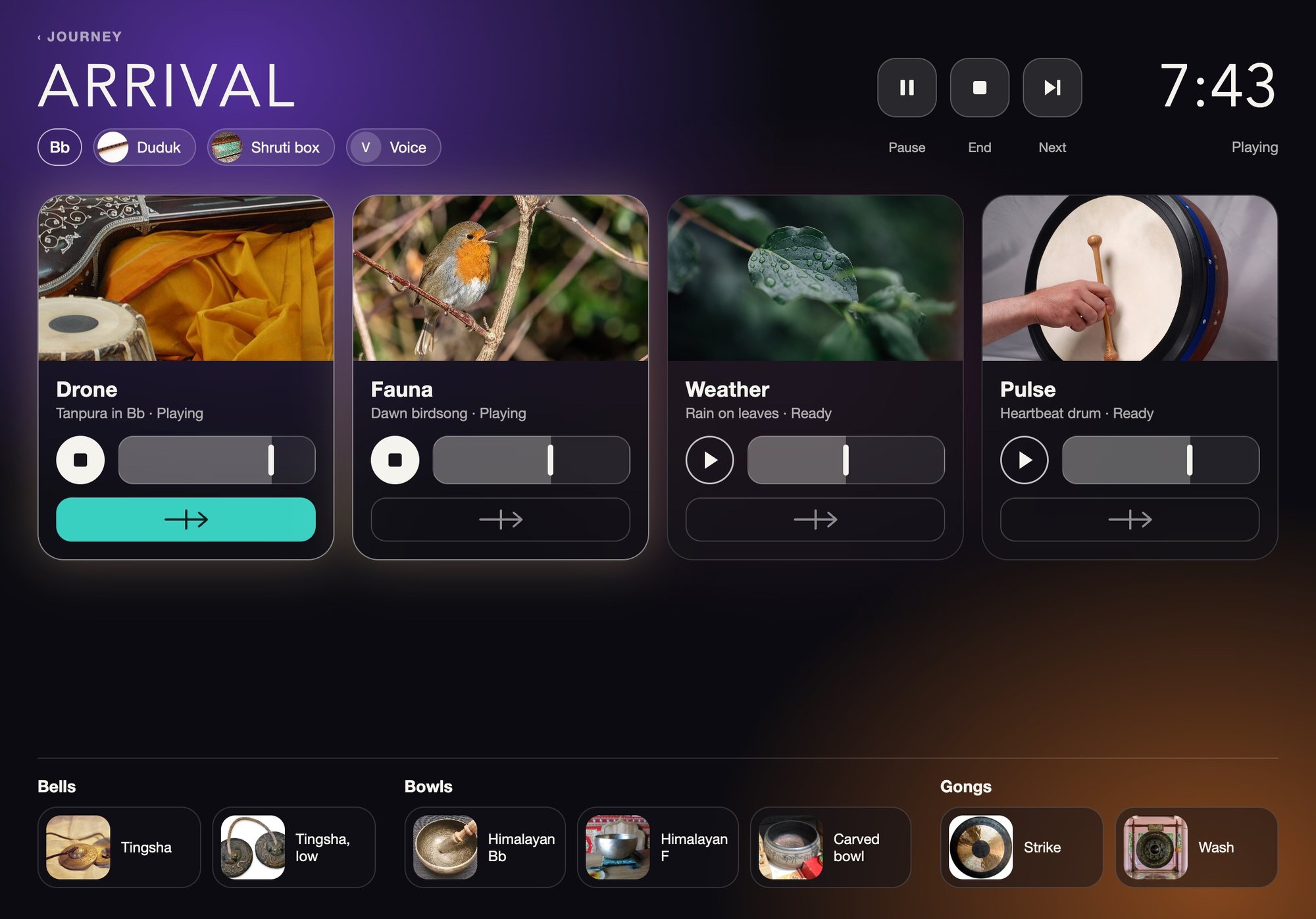
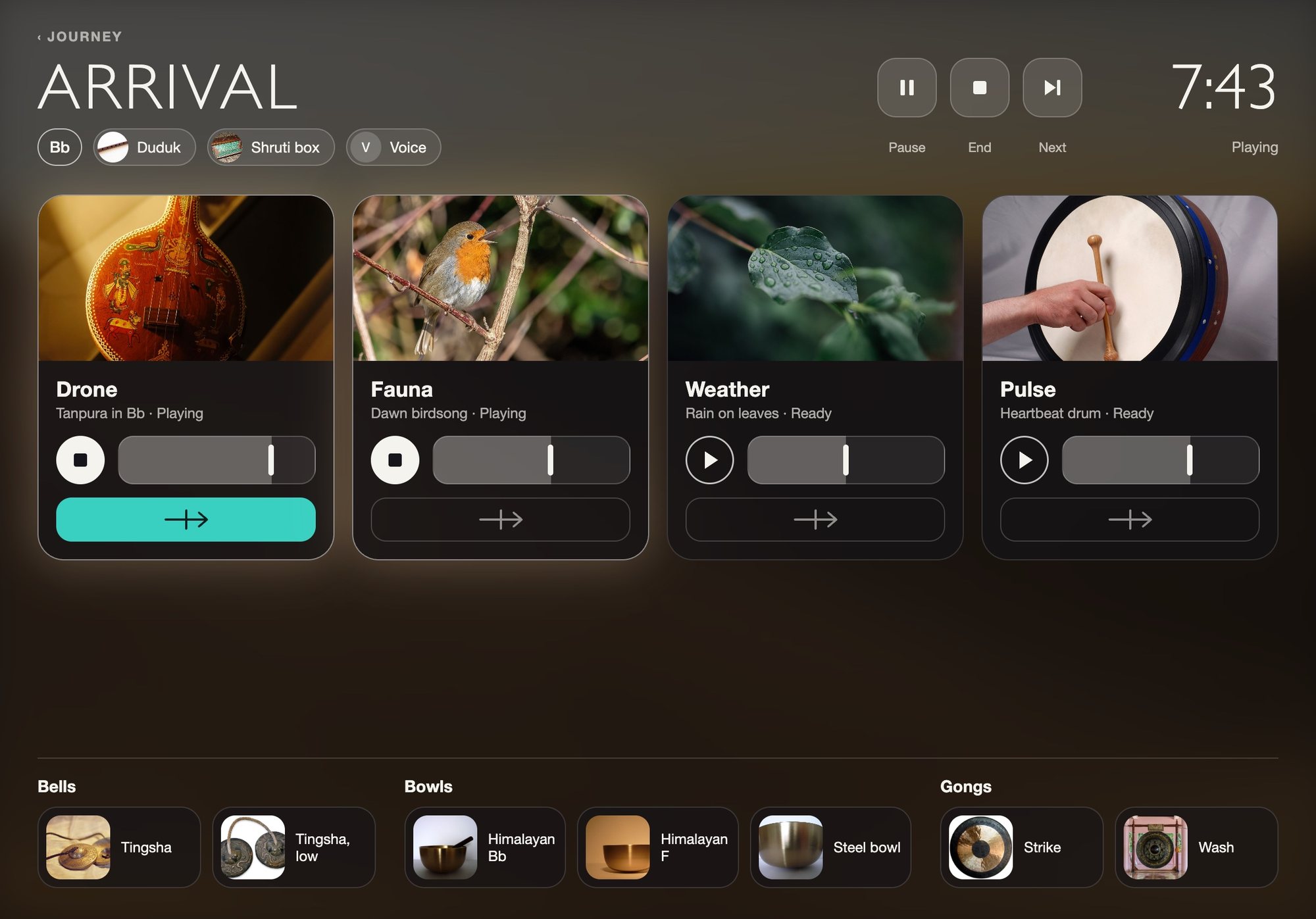
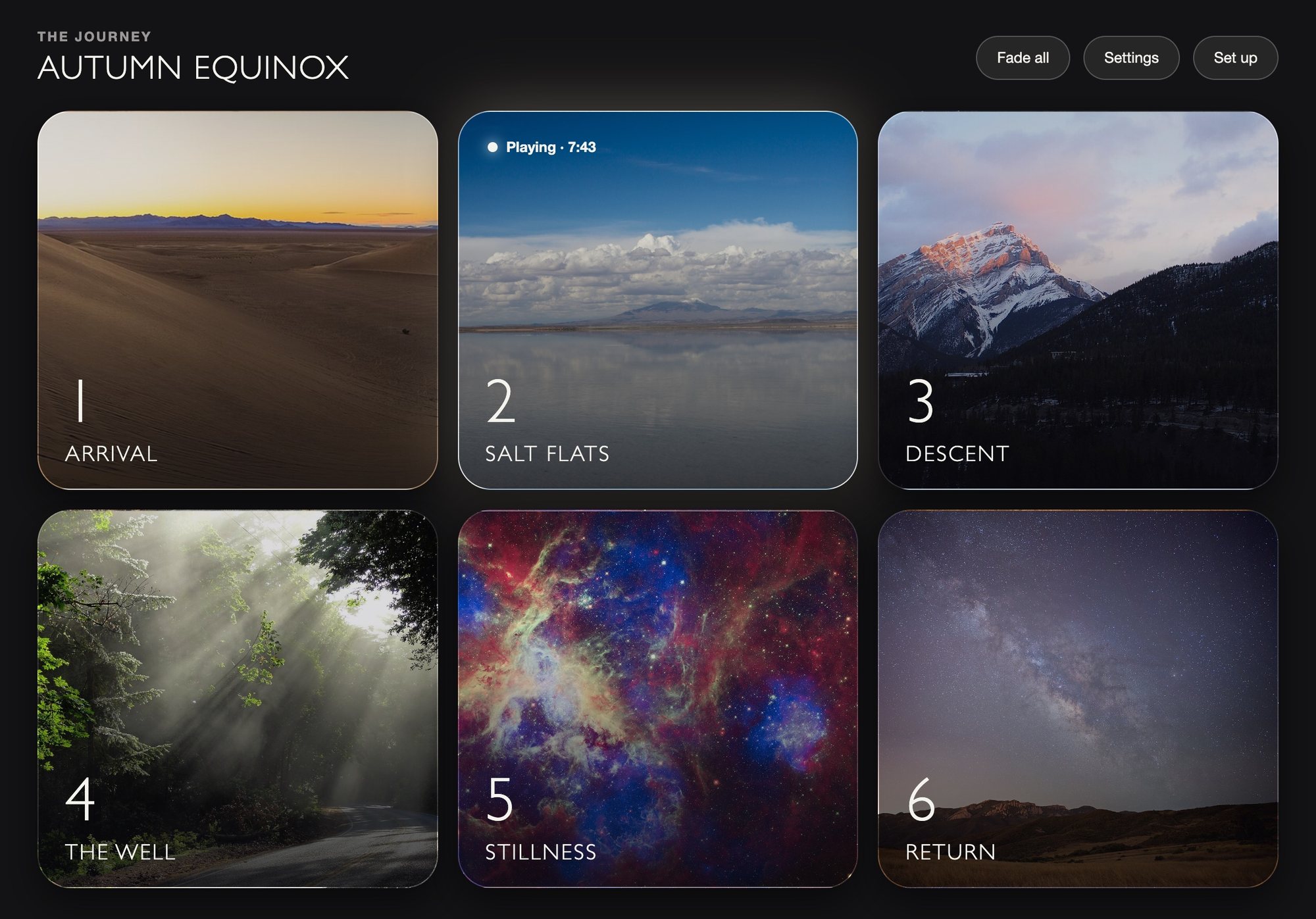
Gradients were replaced by photographs. Each chapter became a place, and each element carries a photograph of what it sounds like.
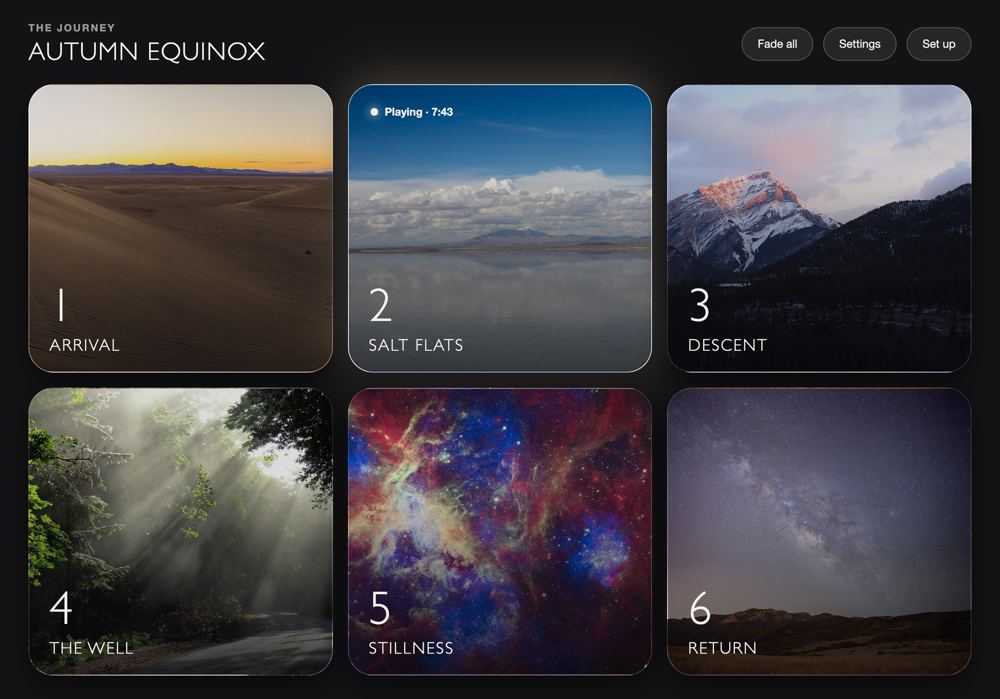
Layout system
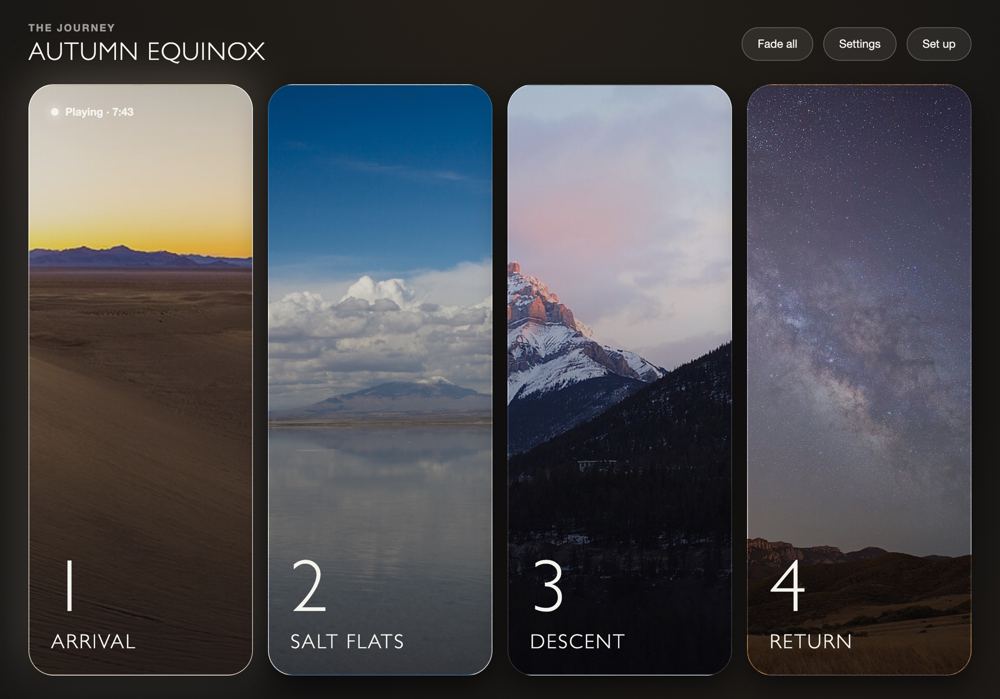
A journey holds one to eight chapters. Up to four sit in a row; more split into two balanced rows.
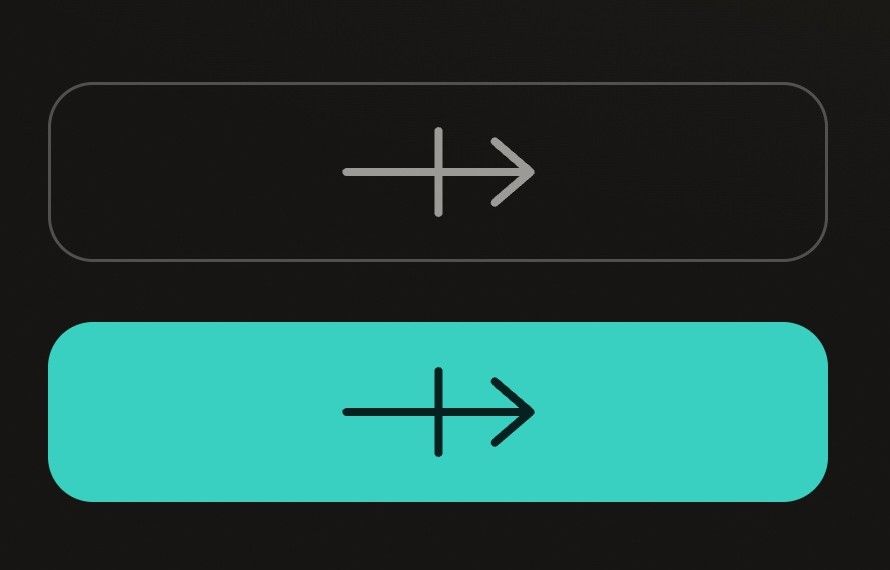
Chapter Crossover
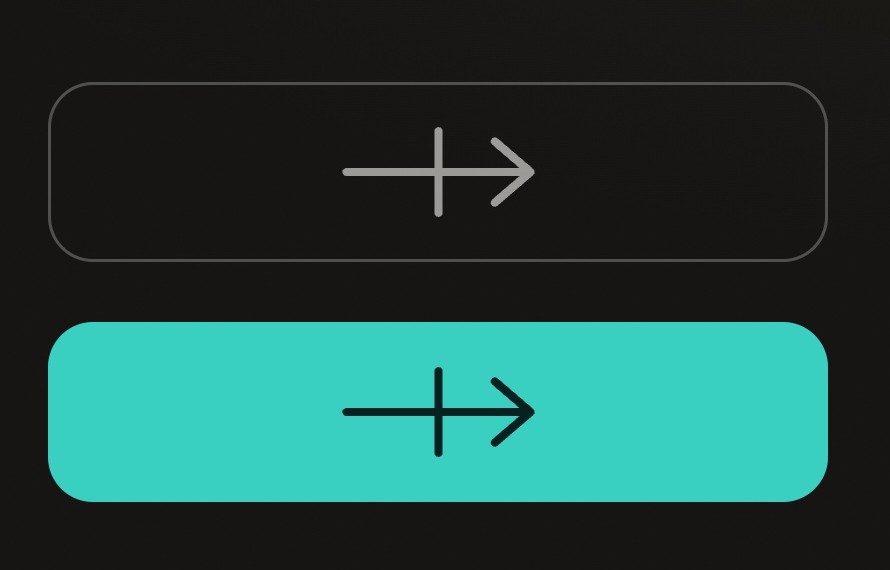
An arrow crossing a short line, under each element. Slid or tapped, it carries a sound across into the next chapter.
Chapter view
Title and key on the left; pause, end, next and the clock on the right. Four elements with one fade button each, and resonants along the bottom.
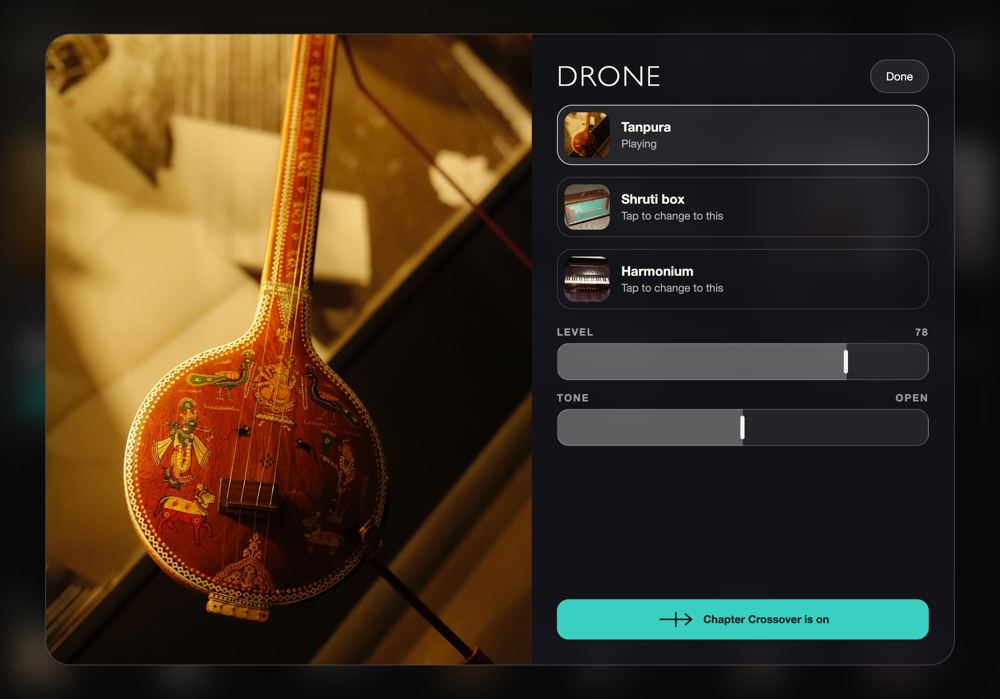
Element, opened
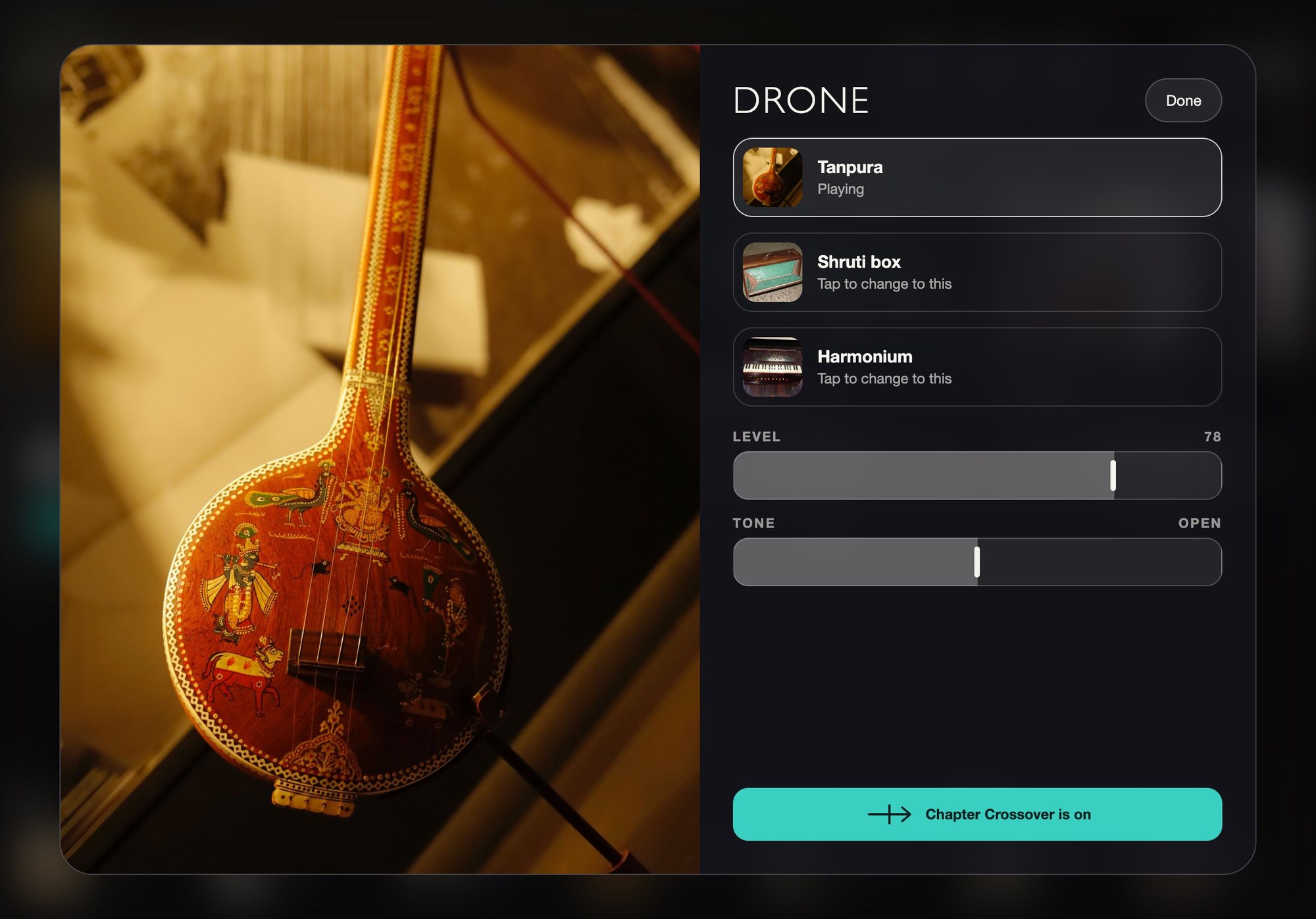
Opening an element fills the screen and dims the rest. Choosing another sound crossfades into it.
Logo process
From a brush stroke to a crossing: lines, freehand, a sine wave, the final mark.
Logo
Two circles touching at one point, with a level line crossing through both: two worlds, one line.
Next
The app is being built as a web app first: installable from a link on iPad and Mac and working offline, so it can be handed to other facilitators without an app store. Stock sounds and photographs ship inside it and can be replaced from a file or a web address. It has not been released yet.
Photographs in the screens: free-licence stock from Wikimedia Commons, Flickr, Pexels and Unsplash. Sajal Kayan from Bangkok, Thailand, CC BY 2.0; Thamizhpparithi Maari, CC BY-SA 3.0; Thomas Quine, CC BY 2.0; Alexis Lours, CC BY 4.0; Shixart1985, CC BY 2.0; Vyacheslav Argenberg, CC BY 4.0; Hinnerk R, Hinnerk Rümenapf, CC BY-SA 3.0; secretlondon123, CC BY-SA 2.0; Jasmine_Sharon_Bodra, CC BY-SA 3.0; Բարի մարդ, CC BY-SA 3.0; Basile Morin, CC BY-SA 4.0; Serg Childed, CC BY-SA 4.0; Johnnyguitar01, CC BY-SA 4.0; Sergei Gussev, CC BY 2.0; Wilson Hui from Calgary, Canada, CC BY 2.0; Annette Teng, CC BY 3.0; Sergei Gussev, CC BY 2.0; Rosmarie Voegtli, BY 2.0; Rosmarie Voegtli, BY 2.0; Rosmarie Voegtli, BY 2.0.


